03·MAS
Master Bath
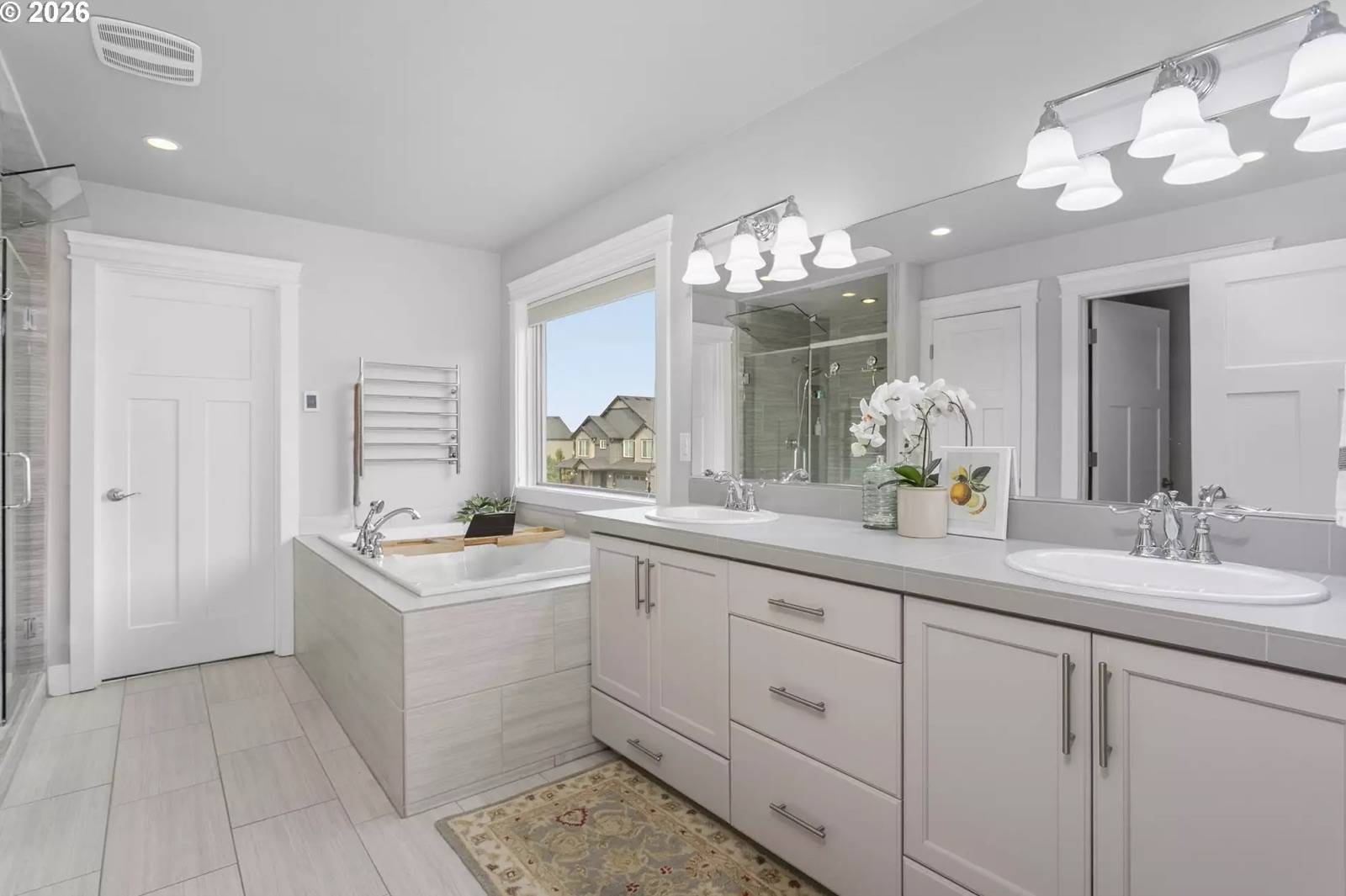
A spa-grade master bath: a full dual-head steam shower with stone-look tile to a fully-tiled ceiling, radiant-heated floors, a heated towel rack, and a wide dual-sink vanity.
At a glance
A dedicated steam shower (fixed rain head + handheld sprayer, fed by a commercial-grade steam generator), radiant-heated floors, and a heated towel rack — the master bath is built as a small home spa.
- Where
- The primary suite bathroom, along the north side of the upper floor. The steam generator itself is not in this room — it lives in the bedroom-3 closet (see the Steam Generator page). This page covers everything you touch in the bathroom: the shower enclosure and its controls, the two fan controls, the floor thermostat, and the towel rack.
- Must know
- The louvred glass transom above the shower door is the steam seal — twist it closed for steam, tilt it open for a normal shower. Nothing else about the room matters as much. Otherwise: give the generator 10–20 minutes to warm up, and let the fan run afterward.
- Status
- In regular use. Steam control is a Mr. Steam iTempoPlus; floor thermostat is a SunTouch SunStat Connect (500875). Open: the humidity fan controller’s model, the towel rack and vanity faucet models, and whether the aroma/chroma and WiFi options are active.
2Everyday use
Three separate comfort systems share this room: the steam shower (occasional-use, needs a warm-up), the heated floor (thermostat-controlled, can run on a schedule), and the heated towel rack (simple on/off or timer). None of them require each other.
The enclosure — and the one control nobody finds
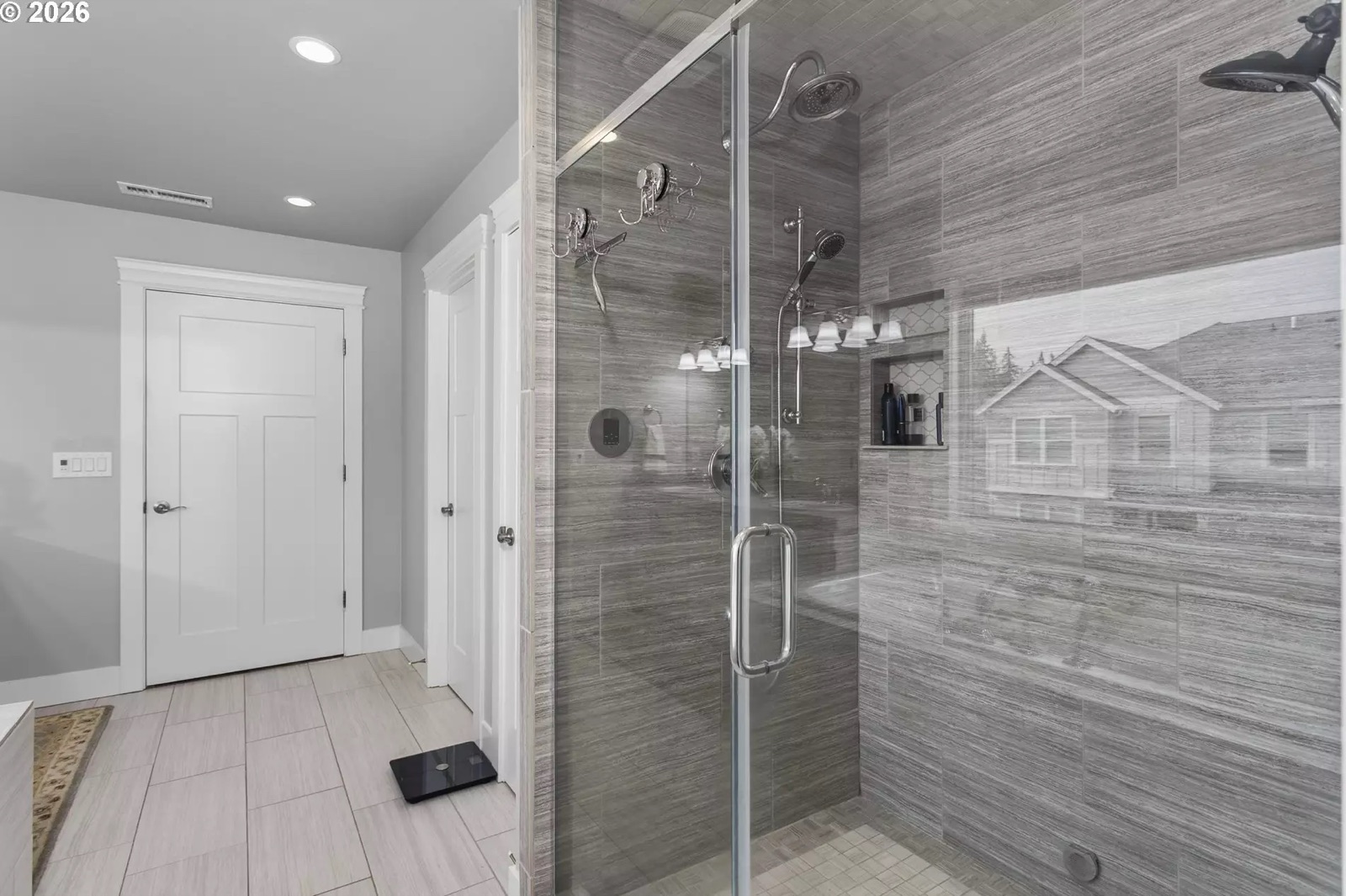
This is a properly sealed steam room, not a tiled shower that steam happens to be piped into. The front glass runs floor to ceiling — no gap over the top, which is where most half-hearted steam showers lose everything. The door is solid glass and swings outward, hinged on the right-hand (west) side of the entrance; because it opens away from you, nothing inside can push it ajar mid-session.
The part a new owner would never work out unaided sits above the door: a louvred glass transom. It is the enclosure’s vent and its steam seal, and it has two positions. Tilt it open and the shower breathes normally, which is what you want for an ordinary hot shower. Twist it closed and its gasket shuts the enclosure up tight for steam. That single twist is the difference between a steam session that works and one that leaks into the bathroom — and the steam shower, sealed properly, works extremely well.
The transom is the steam seal
Running the steam shower
- Twist the transom closed — the louvred glass panel above the door. Sealed enclosure first; everything after this depends on it.
- Start the steam generator from the Mr. Steam iTempoPlus control on the shower’s main wall (the generator itself is documented on the Steam Generator page). Steam generators need a warm-up: expect roughly 10–20 minutes before steam is flowing well, so start it before you undress.
- Set your session length on the control (commonly 15–45 minutes) and get in once steam is flowing. Pull the glass door shut behind you.
- Use the rain head and/or handheld sprayer for a normal rinse before or after the steam cycle — they run on the home's regular hot water, independent of the steam generator.
- Cool down gradually before you get out: let the steam cycle finish or shut it off yourself, then take a minute standing in cooler air/water before stepping out onto a dry floor.
- Tilt the transom back open on your way out, and run the bathroom exhaust fan. A sealed enclosure left sealed and wet is the one way to spoil a room built this well.
Steam safety — read before first use
Door and vent etiquette
- Keep the enclosure sealed while steam is running — transom twisted closed, door shut. An open door or an open transom lets steam escape into the rest of the bathroom, fogging mirrors and pushing moisture into places it doesn't belong.
- For an ordinary shower, leave the transom tilted open. There is no reason to seal the enclosure unless you are actually making steam, and a vented enclosure dries much faster.
- Run the bathroom exhaust fan after every steam session, door and transom open, until the mirrors clear and the room feels dry to the touch. This is the single most important habit for keeping the room mold-free — see Maintenance below.
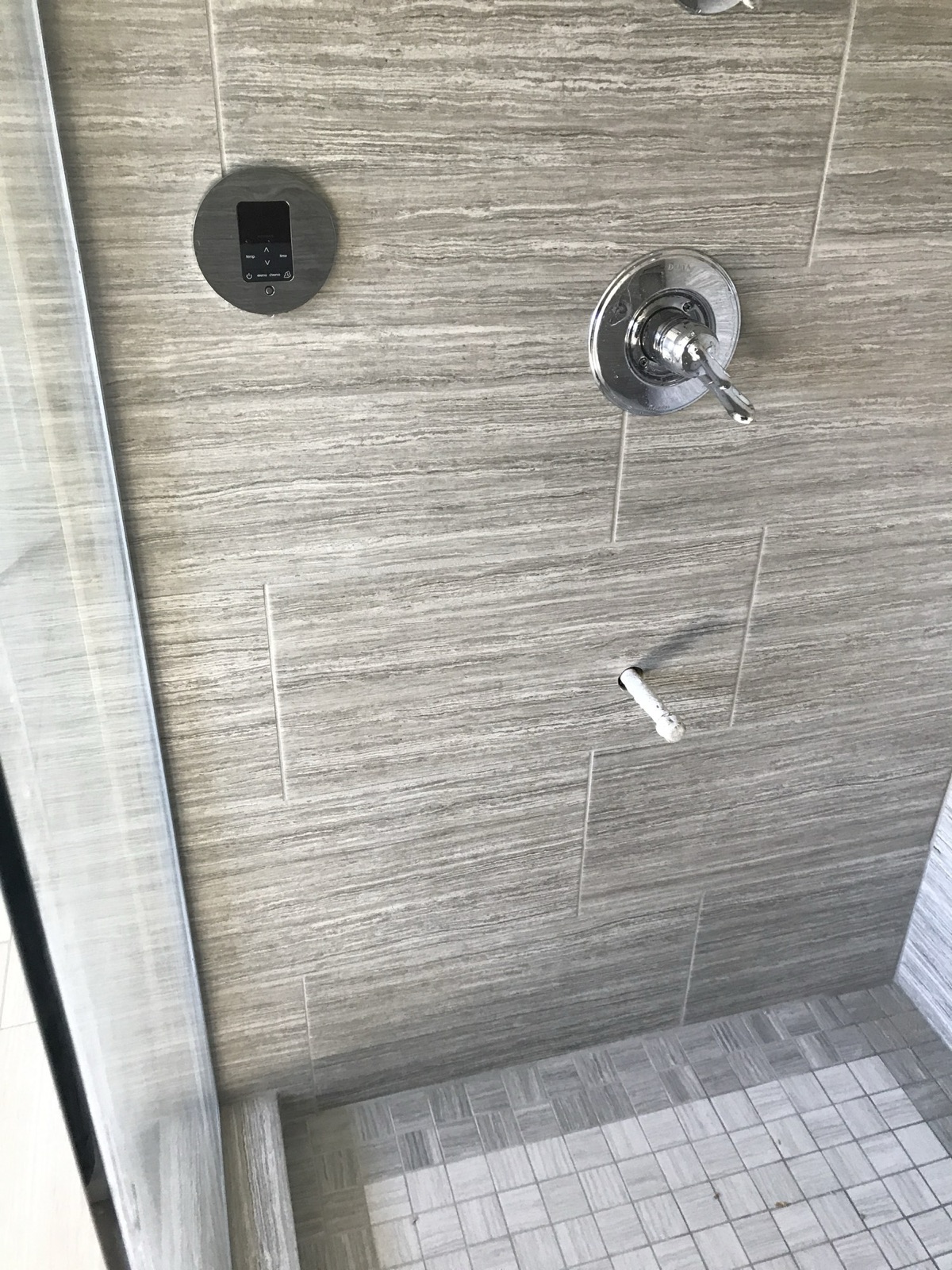
- The steam outlet is at the bottom of the south wall, centred in the shower, an inch or two above the floor — steam rises, so a low outlet fills the enclosure evenly from the floor up. It also gets hot: keep feet, children and pets clear of it while the generator runs, and never sit directly in front of it. Don't block it or the exhaust vent with shampoo bottles, wash cloths, or anything else — both need clear airflow to work as designed.
The two fan controls
The master bath has two separate exhaust controls, and they are deliberately different devices. Knowing which is which saves a new owner from switching the wrong one and wondering why nothing happened.
| Where | What it is | How you use it |
|---|---|---|
| Main area of the bath — the vanity/tub/shower side | A smart humidity-sensing fan controller. It reads the humidity in the room and runs the fan on its own when the air gets wet. | Mostly nothing. It handles a shower or a steam session by itself and keeps running until the room is dry. Override it by hand when you want to. |
| Water closet — the separate toilet compartment | A simple preset-timer control. No sensor. | Press the button for a set run time; it stops on its own. |
The practical consequence: after a steam session you do not have to remember to leave the fan running in the main bath — the humidity controller will keep it going and shut it off when the room is genuinely dry, which is later than most people would leave it. Make/model of the humidity controller still to identify — it needs a photo of the faceplate.
Heated floor
The floor thermostat is a SunTouch SunStat Connect (model 500875), mounted on the wall near the towel rack — a WiFi-capable touchscreen control (now discontinued) that sets and schedules the floor temperature independently of the room's air thermostat, using a sensor embedded in the floor tile rather than room air. Tap it to check or bump the current setpoint; use its schedule feature if you want the floor warm before you get up. Programming is covered under Maintenance.
The SunStat Connect is also the room’s one WiFi-capable control, built to pair with the Watts Home app for remote access, automatic clock setting and weather-based adjustment. Whether it is joined to WiFi and the app is to confirm. Everything else in this bathroom — the Mr. Steam iTempoPlus, the two fan controls and the towel rack — is a standalone wall control with no app at all.
Heated towel rack
The wall-mounted heated towel rack runs independently — turn it on when you want warm towels and off when you don't (or leave it on low in cold months). Confirm at walkthrough whether it has its own switch/timer or runs continuously.
3Maintenance
Steam room habits
- Squeegee the walls and glass/door after every use — this is the single biggest thing you can do to keep tile grout and glass looking new and to cut down on mildew. A cheap shower squeegee kept on a hook inside works fine.
- Run the exhaust fan for 20–30 minutes after each steam session (longer than after a normal shower) — steam showers put far more moisture into the room than an ordinary shower, and that moisture needs somewhere to go.
- Leave the door cracked between uses (once the room has dried) so the enclosure isn't sealed and damp between sessions.
- Wipe down or re-seal grout lines periodically — ordinary tile/grout care, just more important here given the humidity load. A stone-look porcelain tile like this is generally low-maintenance and doesn't need the sealing that natural stone would.
Steam generator descaling
Steam generators need periodic descaling (removing mineral buildup from the water tank) to keep producing steam efficiently and to avoid error codes — this is a generator-side maintenance job, not something you do from the bathroom. See the Steam Generator page for the descaling schedule and procedure once the exact model is confirmed.
Heated floor thermostat
- The SunStat Connect runs a floor-sensor probe embedded in the tile, not just room air — the displayed "floor" reading is the actual slab/tile temperature. Program a schedule (e.g., warm 30–60 minutes before your usual wake time, cooler overnight) rather than running it at one temperature all day; this is both more comfortable and cheaper to run.
- No filter or bulb to replace — radiant floor heat is essentially maintenance-free electrically. The only real failure mode is the thermostat itself or (rarely) the heating element/cable in the floor, which would need a flooring contractor.
- This exact model — the SunStat Connect (500875) — is discontinued. A failed unit isn’t a like-for-like swap; a flooring/electrical contractor would replace it with SunTouch’s current touchscreen line instead.
Towel rack
Wipe down periodically; if it's hardwired (no visible cord), there's nothing else to maintain. Confirm hardwired vs. plug-in at walkthrough.
4Troubleshooting
- No steam / weak steam: check the transom above the door first — if it is tilted open, the enclosure cannot hold steam no matter how well the generator is running, and this is far and away the most common reason a steam shower "doesn't work." Then check the door is shut and the generator control shows a cycle running. If the control itself won't start a cycle, that's a generator issue — see the Steam Generator page.
- Steam smells musty or the room won't dry out: almost always insufficient post-session ventilation. Leave the transom tilted open between uses, run the exhaust fan longer, and check that the fan itself is working. In the main bath the fan is on a humidity controller, so a fan that never runs points at the controller rather than the fan.
- Rain head or handheld pressure/temperature is off: that's the house's normal hot-water and pressure system, not the steam generator — see the Plumbing & Hot Water page.
- Floor doesn't feel warm: check the thermostat's setpoint and schedule first (it may simply not be scheduled "on" right now); a floor that never heats regardless of setpoint is a job for an electrician/flooring contractor who works with radiant heat.
- Towel rack stays cold or won't turn off: check for a dedicated switch near the rack or at the light-switch bank before assuming it's faulty.
5Specs & identity
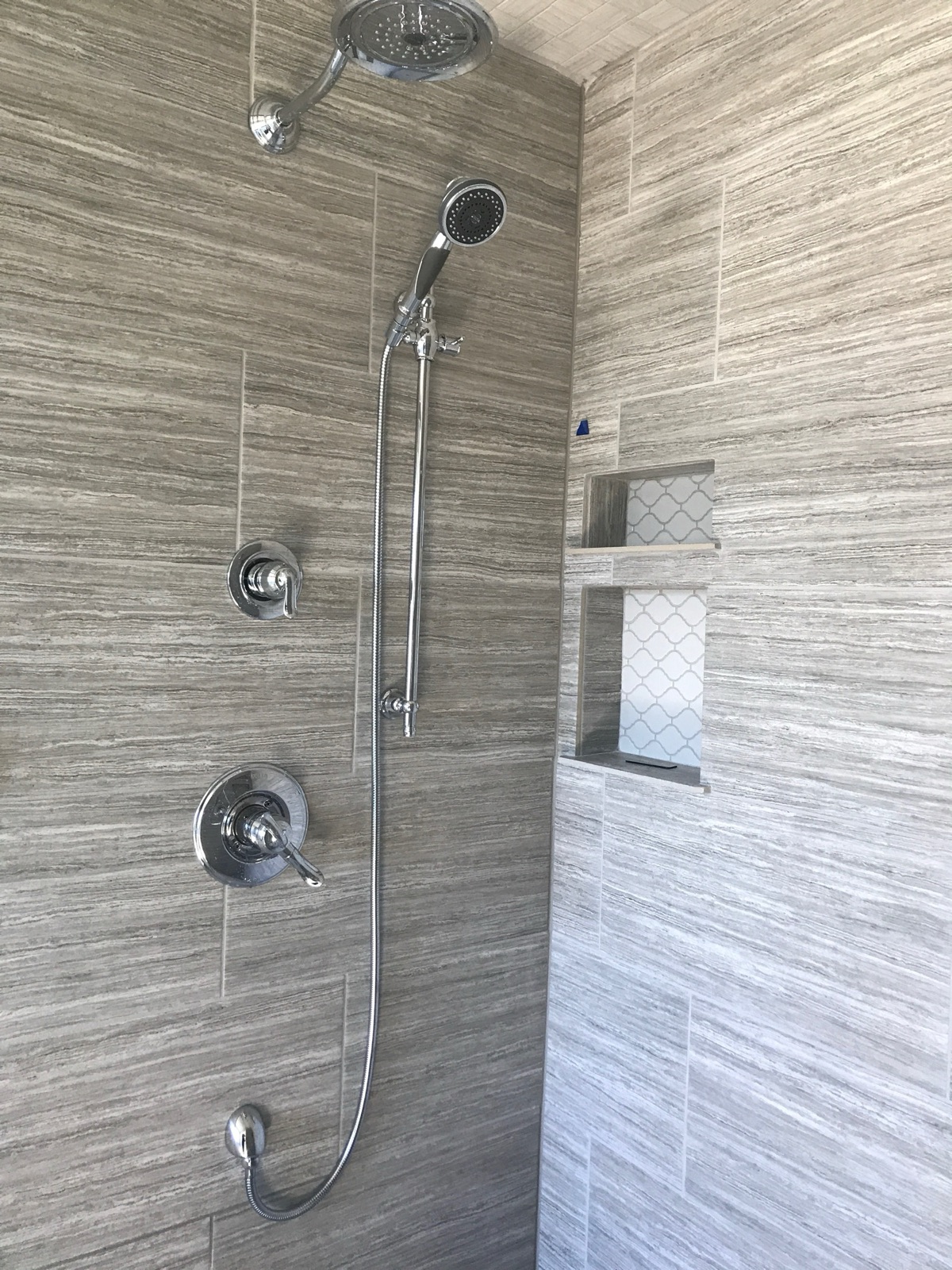
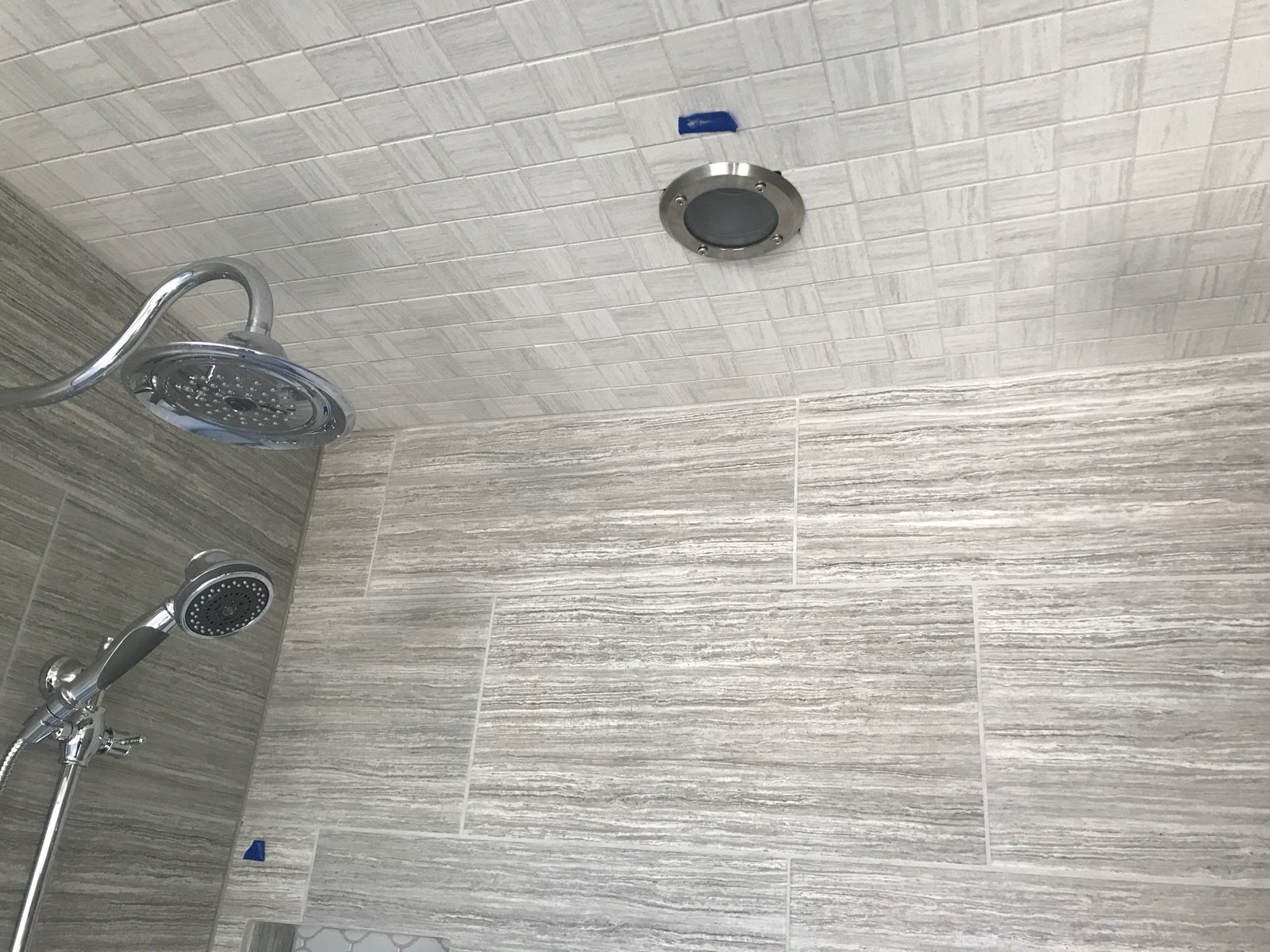
| Configuration | Dual-head: fixed rain shower head + handheld sprayer on a slide bar, plus separate valve trims |
|---|---|
| Enclosure | Fully sealed. The front glass runs floor to ceiling — no open gap above it — over stone-look tile carried to a fully tiled ceiling. |
| Door | Solid glass, swings outward, hinged on the right-hand (west) side of the shower entrance. |
| Transom | A louvred glass transom above the door — gasketed, and the enclosure’s only vent. Tilt open for normal ventilation while showering; twist closed to seal the enclosure for steam. It seals well; the steam function is not compromised by it. A photograph of the transom is still needed — the current shower photo shows the door position but not the transom. |
| Fixture finish | Polished chrome |
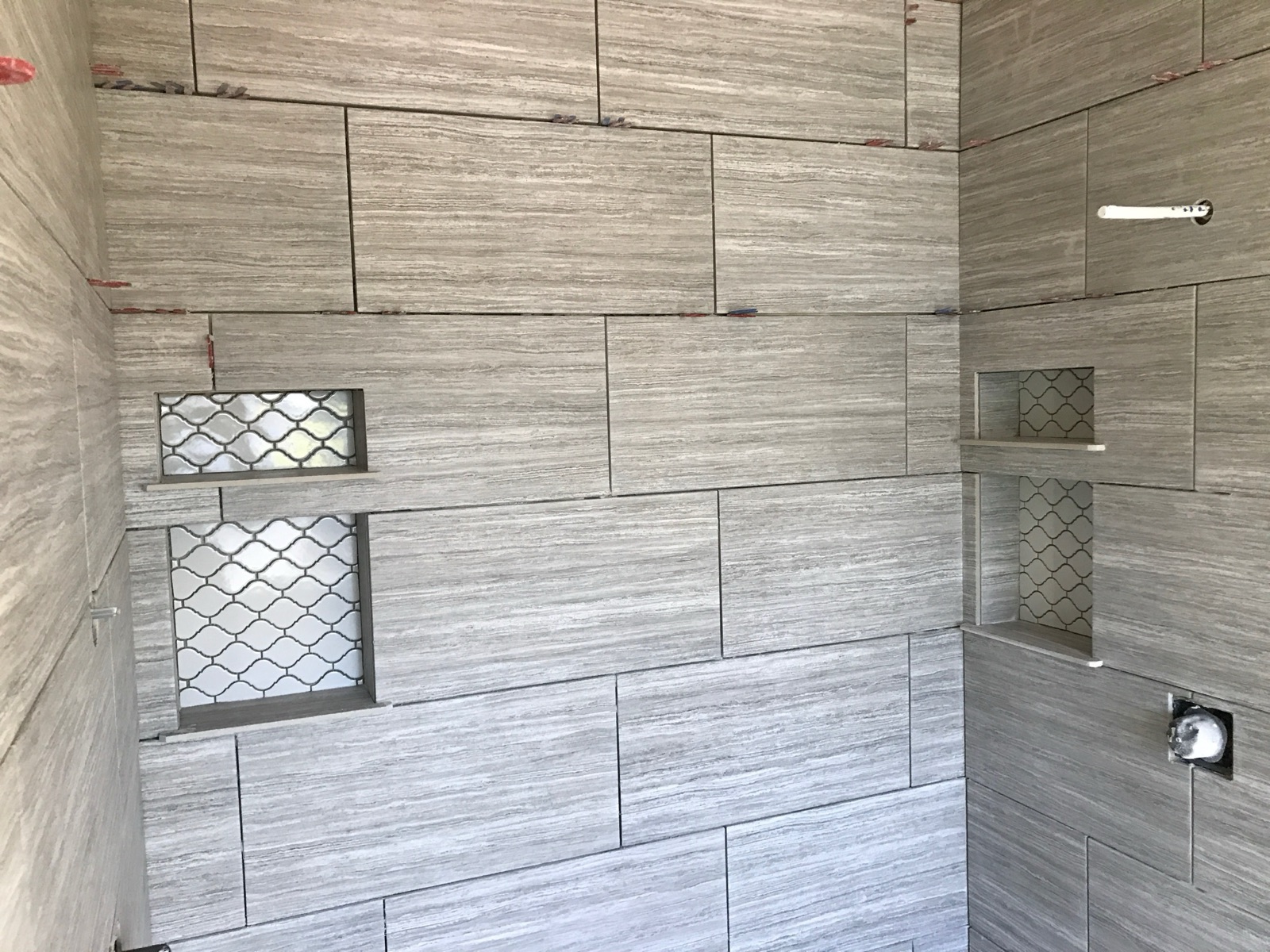
| Tile | Stone-look linear porcelain tile, floor to ceiling, including a fully tiled ceiling — tiled rather than drywalled because a steam enclosure runs at 100% humidity — confirm exact tile line/manufacturer |
| Design detail | Two stacked mosaic-tile accent niches (quatrefoil pattern) built into the shower wall for storage/display |
| Fixture brand/model | To confirm at walkthrough — read it off the trim plate. The lever trims are of a mid/upper-tier type (Moen/Delta style). |
| Steam outlet | Low on the south wall, centred in the shower, an inch or two above the floor. Steam rises, so the head is set at the bottom of the enclosure and fills it from the floor up. The fitting runs hot in use. |
| Shower light | A steam-rated sealed light recessed into the tiled ceiling — gasketed bezel, flat glass lens. This is the round fitting visible in the ceiling photograph; it is not a steam outlet. make and model to gather |
| Steam control | A Mr. Steam iTempoPlus, round trim, mounted low on the shower’s main wall next to the steam head — the same manufacturer as the generator, so this is a matched Mr. Steam system rather than a mixed-brand install. The keypad carries temp, time, power, aroma, chroma, and a two-person preset glyph: programmable temperature and duration, a clock, AromaSteam, ChromaSteam, and two saved personal settings. |
| AromaSteam / ChromaSteam | The aroma and chroma keys are only fitted on an iTempoPlus if those options were installed, so a dead key on this control is a real possibility. Whether the aroma-oil well and chroma light are installed and working is to confirm at the walkthrough. |
| Steam generator | See the Steam Generator page for make/model/serial/location |
| Main bath fan control | A smart humidity-sensing controller — it senses the room’s humidity and runs the exhaust fan automatically, without anyone touching it. Manual override is available on the control. |
|---|---|
| Main bath fan control — make/model | To gather — needs a photograph of the faceplate to identify |
| Water closet fan control | A preset-timer control — press a button for a fixed run time, no humidity sensing |
| Shower enclosure vent | The louvred glass transom above the shower door (see the Steam shower block above) — this is the enclosure’s own vent, separate from the room’s exhaust fans |
| Thermostat brand | SunTouch (a Watts Water Technologies brand) — a WiFi touchscreen floor-heating control with a floor-sensor readout, energy monitoring, and a "Smart Start" scheduling feature |
|---|---|
| Exact model | SunStat Connect, part 500875. This model is discontinued; SunTouch's current touchscreen line (e.g. ConnectPlus) is the replacement path if it fails. |
| Serial number | owner's edition |
| System type | Electric radiant floor heating (in-floor heating cable/mat under the tile) — not hydronic |
| WiFi / app | The 500875 is a WiFi-capable model pairing with the Watts Home app for remote access, automatic clock setting, and weather-based adjustments. It also runs perfectly well as a plain standalone programmable thermostat. Whether it is joined to WiFi and the app is to confirm. |
| Type | Wall-mounted, multi-bar (7-bar) heated towel rack, chrome finish |
|---|---|
| Brand/model | To confirm at walkthrough — no visible branding in the current photo |
| Power | To confirm — hardwired vs. plug-in, and whether it has its own switch/timer |
| Configuration | Wide dual-sink vanity, dark wood cabinetry, solid-surface counter |
|---|---|
| Faucet brand/model | To confirm at walkthrough |
6Documents & links
- Mr. Steam — safe use guidelines for steam showers
General, brand-agnostic safety guidance for steam bathing — session length, hydration, who should check with a doctor first. - Mr. Steam — best practices for using and ventilating a steam shower
Why sealing the enclosure and running the exhaust fan afterward matters. - Mr. Steam — iTempoPlus control product page
Official product page for the in-shower steam control — the temp/time/aroma/chroma/two-preset feature set of the keypad in this shower. - SunTouch — SunStat Connect (500875-SB) product page
Official SunTouch/Watts product page for this thermostat. Now a discontinued product line. - SunTouch — SunStat Connect installation & operation manual (PDF)
The model-specific manual for the 500875, official suntouch.com. - SunTouch — underfloor heating installation & operation manual (PDF)
General SunTouch floor-heating system (cable/mat) manual, official Watts source — separate from the thermostat manual above.
Section 8Technical reference ExpandCollapse
The engineering layer — for a buyer's technician, or a curious owner.
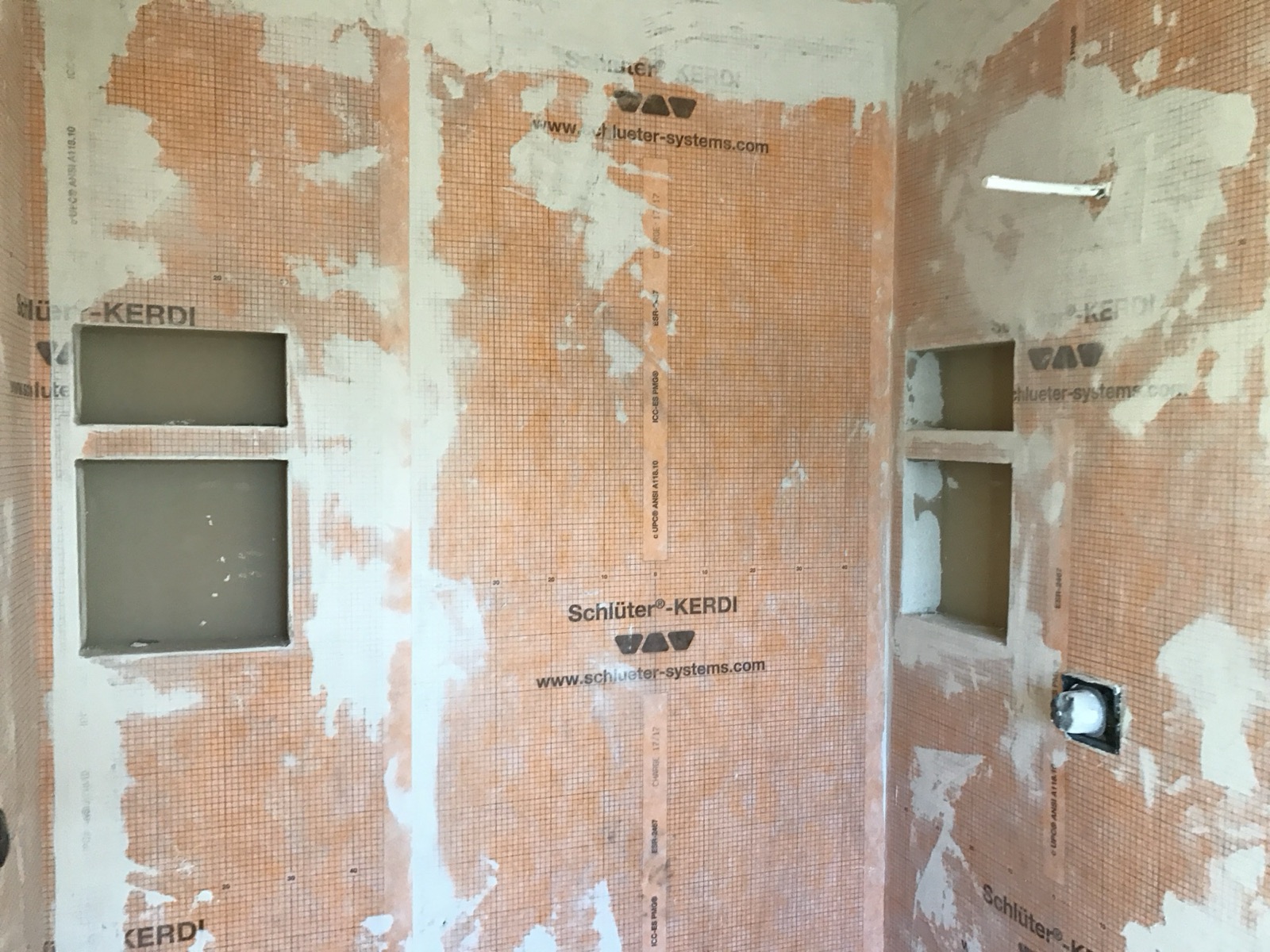
Two things make a real steam shower different from a fancy regular shower: it is a sealed, humid microclimate, and the moisture management around it is what determines whether the room stays beautiful for ten years or grows mold behind the tile.
What is behind the tile
Built the expensive way
Why sealing matters
A steam generator is sized to heat and saturate a specific enclosed volume of air to 100% humidity. Every gap — an open door, an open transom, an ill-fitting seal — lets that humid air escape and pulls in cooler, drier air, which both wastes the generator's output and pushes moisture into places the room wasn't built to handle it (behind trim, into adjoining walls). This room was designed around that fact from three directions at once: the front glass goes floor to ceiling rather than stopping short, the ceiling is fully tiled (drywall and standard ceiling paint fail under sustained 100% humidity), and the transom above the door gives you a gasketed, closable vent instead of a permanent opening. A steam enclosure with a fixed vent or an open top can never hold a proper session; this one can.
The generator lives elsewhere — why that's normal
Residential steam generators are almost always installed remotely from the shower itself — commonly in a nearby closet, basement, or attic space — because they need access to a cold-water supply line, a dedicated electrical circuit, and clearance for service, none of which belong inside a shower enclosure. In this house the generator is in the second-office/bedroom closet, which is a normal (if slightly long) run for a steam line; see the Steam Generator page for the plumbing/electrical specifics, descaling schedule, and error-code troubleshooting.
Floor heat: how the SunTouch system actually works
Electric radiant floor heating embeds a resistive heating cable (or a pre-built mat) directly under the tile, controlled by a thermostat that reads a probe embedded in the floor rather than relying on room-air temperature alone — which is why the photographed control shows a distinct "Floor" reading. "Smart Start" style features (present on several SunStat models) learn how long the floor takes to reach a scheduled setpoint and begin heating earlier on cold days so the floor is at temperature exactly when scheduled, rather than starting a fixed time before. Because the heating element is sealed under the tile, there are no user-serviceable parts — troubleshooting beyond a thermostat setting is an electrician/flooring-contractor job.
What to gather to finish this page
- A photograph of the louvred glass transom above the shower door, open and closed. The current shower photo shows the door position clearly but the transom is not legible in it, and it is the room's most important control.
- A photograph of the smart humidity fan controller in the main bath, close enough to read the faceplate and identify the model.
- Whether AromaSteam and ChromaSteam are installed and functioning behind the iTempoPlus control's
aroma/chromakeys — or whether those are dead keys. - Whether the SunStat Connect floor thermostat is joined to WiFi and the Watts Home app.
- The heated towel rack's brand/model and whether it's hardwired or plug-in, with or without its own switch/timer.
- The vanity faucet brand/model.