03·KIT
Kitchen
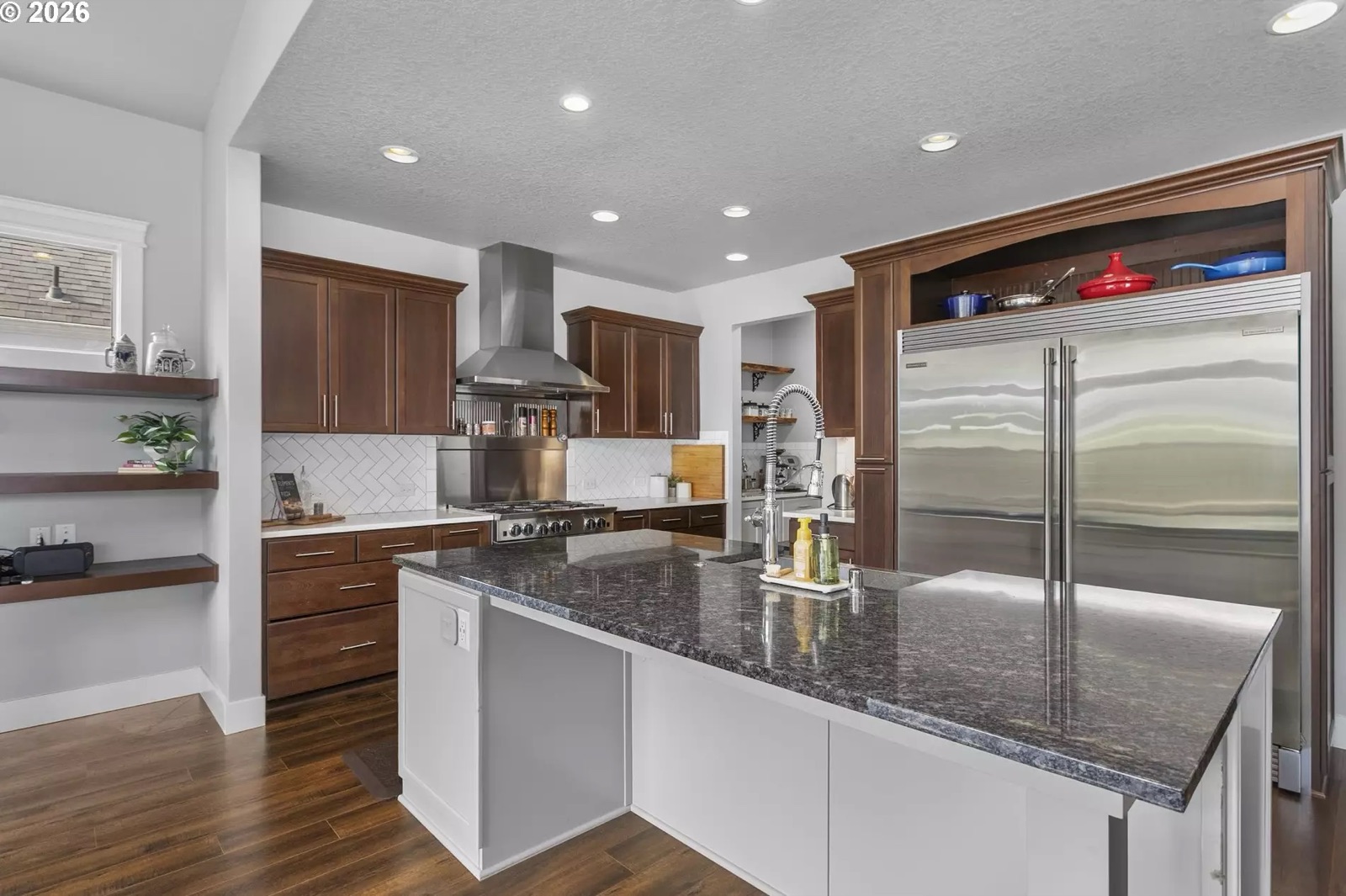
A cook’s kitchen built around a BlueStar 6-burner professional range: pro-grade cooking, a 1200 CFM hood with its own automatic makeup-air system, full-size refrigeration, a walk-in pantry, and an apron-front sink.
At a glance
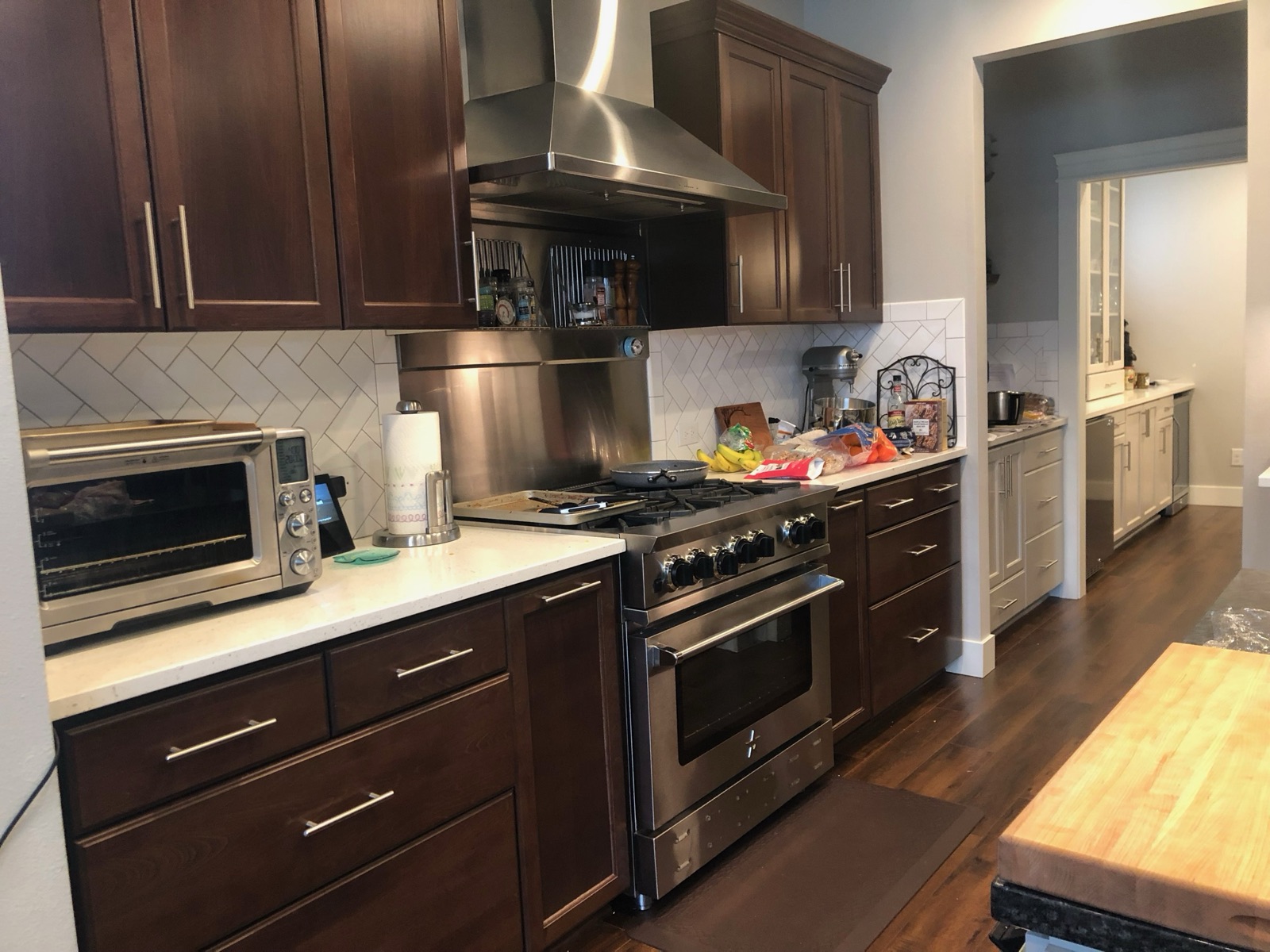
A BlueStar 6-burner professional gas range on the east wall under a 1200 CFM Zephyr Siena Pro wall hood, a full-size Electrolux ICON refrigerator + freezer column pair, a built-in Sharp microwave drawer, a Bosch 800 Series dishwasher, an InSinkErator garbage disposal, an apron-front sink with a pro-style pull-down faucet, and a walk-in pantry. Every appliance in this room is included with the house, no exception.
- Where
- Main floor, open to the family room. The butler’s pantry is off the south end of the kitchen — a pass-through to the formal dining room and the bar — and the walk-in pantry opens off it.
- Must know
- The range has open gas burners with no continuous pilot — each burner is lit by a spark igniter when you turn the knob. The hood is powerful enough that the house has its own automatic makeup-air system to feed it: run the hood hard and a damper upstairs opens by itself. Do not block or disable it — see below.
- Status
- Installed and in daily use. Every appliance in this kitchen is the original 2017 unit. Nothing here has ever been replaced, and none of it has had a failure or a service call in nine years. Model and serial numbers for the refrigerator and freezer columns are still to gather from their interior plates.
2Everyday use
You don’t need to know anything about BTUs to cook dinner — turn a knob, get a flame. The three things worth knowing before you cook here are the simmer burner, the hood, and the makeup-air damper the hood opens for itself.
Lighting a burner
- Push in and turn any knob to Lite — you’ll hear/see the igniter spark and the burner will catch. Hold the knob in for a second on a cold start if it doesn’t catch immediately.
- Turn past Lite to set the flame height. These are open burners — the flame is visible around the whole ring, and it responds instantly (this is the main reason people love pro ranges: no lag between turning the knob and the heat changing).
- To turn off, turn the knob back to Off — the flame extinguishes immediately (there’s no standing pilot to worry about).
The simmer burner
Oven
- Standard gas oven below the cooktop, controlled by the black knob(s) and window in the door.
- The range has no continuous pilot light — if the oven or a burner won’t catch, see Troubleshooting below before assuming something is broken.
Range hood
- Turn the hood on before you start cooking with the open burners, and let it run a few minutes after — at 1200 CFM it clears heat, steam and grease fast, but it needs a head start to keep smoke from ever reaching the room.
- Controls are the touch panel on the front of the hood; fan speed and light are independent — you can run the light without the fan.
- On the higher fan speeds the hood also opens the house’s makeup-air damper. That happens on its own; there is nothing to switch.
Makeup air
A hood this powerful throws away a lot of air, and a well-sealed house cannot replace it through the walls. So the house supplies the replacement air deliberately: a pressure sensor on the hood watches exhaust pressure, and when it crosses the threshold a powered damper upstairs opens automatically. The intake is in the roof and the outlet vent is in the upstairs hallway. Nothing blows it in — the hood’s own suction draws it through. Nothing to set up, nothing to remember.
- What you’ll notice: run the hood on high and the upstairs hallway vent starts moving air. In winter that air is cold, because it is coming straight off the roof. That is the system doing its job, not a draught to hunt down.
- What you’ll notice if it never opens: the hood gets quieter and less effective as it fights the house, exterior doors pull hard or whistle, and a tightly-closed house can end up at enough negative pressure to pull air back down a vented appliance’s flue. That last one is the reason a hood over ~400 CFM gets a makeup-air provision in the first place.
Leave the makeup-air system alone
Microwave drawer
A built-in stainless Sharp SMD2470AS microwave drawer — 24", 1.2 cu ft, 1000 W — lives in the island cabinetry. It opens like a drawer, toward you, rather than overhead. It runs the usual microwave modes off its own keypad: Popcorn, Reheat, Beverage, Defrost, plus Potatoes/Vegetables presets and a Keep Warm setting, a numeric keypad for time/power entry, and Open/Close on the panel (the drawer motorizes open and closed — don’t force it by hand).
Dishwasher
A built-in Bosch SHX68TL5UC — 800 Series, bar handle — sits in the perimeter cabinetry near the sink. The control panel has everything you need: On/Off, six wash cycles (Heavy, Auto, Eco, Normal, Speed 60, Rinse), a text display that reads out cycle status, and six options (Delay, Half Load, Delicate, Sanitize, Extra Dry, Extra Scrub) that layer onto whichever cycle you pick. Auto is the smartest all-purpose choice for a mixed load; Speed 60 gets lightly soiled dishes clean and dry in about an hour. Press and hold Start/Resume for 3 seconds to cancel a running cycle.
Garbage disposal
- A continuous-feed InSinkErator Badger 5 lives under the sink — which sink (main kitchen sink vs. the island prep sink) is to confirm at walkthrough. Flip the wall switch, run a steady stream of cold water, then feed food waste in gradually rather than packing it in all at once.
- Per InSinkErator’s own guidance, never put fats, oils or grease down it, and go easy on hard or fibrous material it isn’t built for — bones, fruit pits, corn husks/cobs, celery and other stringy vegetables, and any non-food items (glass, plastic, rubber bands, produce stickers). The Badger 5 is InSinkErator’s entry-tier disposer — no auto-reverse, no stainless grind components — so it rewards a bit more care than a heavier-duty model would need.
3Maintenance
- Range grates & burner caps: lift off and hand-wash (warm soapy water); the burner caps and igniter electrodes need to stay dry and free of food debris or spark-ignition gets unreliable. BlueStar’s official use & care manual (linked below) covers grate care and the annual professional gas-line/orifice check they recommend for open-burner ranges.
- Range hood grease filters: the mesh/baffle filters are removable and dishwasher-safe — clean monthly with regular cooking, more often if you fry a lot. A greasy filter is the #1 cause of a hood losing suction.
- Makeup-air damper: nothing scheduled. Once or twice a year, run the hood on high and check that air moves at the upstairs hallway vent — that is the whole test. Keep the vent itself clear of stored boxes, furniture and drapery.
- Refrigerator water filter: filter model to confirm — typical replacement interval is every 6 months regardless of brand; if the ice/water tastes off before then, replace early (see Troubleshooting).
- Dishwasher filter: a self-cleaning 3-part filter (large-object trap, flat fine filter, micro filter) sits in the tub floor under the lower spray arm — unscrew the large-object trap and lift the whole assembly out to rinse under running water. Per Bosch’s official care guide, clean it 3–6 times a year if you rinse dishes before loading, 4–12 times a year if you only scrape first, or as often as 12 times a year with hard water; clean it after any load with heavy starch (potatoes, pasta).
- Garbage disposal: no scheduled service — the InSinkErator Badger 5 just needs cold water run before, during and briefly after use, and a diet that skips grease/fats/oils, bones and stringy produce (see Everyday use, and InSinkErator’s official guidance in Documents). Running a few ice cubes through periodically helps knock loose buildup; a citrus peel afterward is a common (if unofficial) freshener.
- Walk-in pantry: no real maintenance — wire shelving wipes clean; check the shelf-clip weight rating before loading it with cases of canned goods.
4Troubleshooting
- Burner clicks but won’t light: almost always a wet or food-fouled igniter electrode (the small ceramic spark tip next to the burner) — dry it off and wipe clean, make sure the burner cap is seated correctly, then try again. Continuous clicking after the burner is lit usually means a knob is stuck slightly past Off, or a neighboring burner’s switch is damp.
- Hood rumbles or vibrates: usually a loose duct connection at the hood or roof/wall cap, or a grease-caked blower wheel losing balance. Clean the filters first (see Maintenance); if the rumble persists, the ducting or blower likely need a look.
- Hood seems weak on high, or the doors pull hard while it runs: check the makeup-air side before blaming the hood. Put a hand at the upstairs hallway vent with the hood on high — if nothing is moving, the damper isn’t opening (pressure sensor, damper motor, or its power) and the hood is being strangled by the house. Don’t compensate by cracking a window and living with it; get the damper working.
- Cold air at the upstairs hallway vent: normal while the hood runs — that vent is fed straight from the roof. If it’s cold when the hood is off, the damper is sticking open and should be looked at.
- Fridge ice/water tastes off: replace the water filter (see Maintenance) and run a few gallons through to flush the new filter before trusting the taste. If it still tastes off, check whether the fridge has been unused for a while — stagnant water in the line is the other common cause.
- Microwave drawer won’t open/close: check that nothing is jamming the slide rails; the drawer is motorized on Open/Close — don’t force it. Power-cycle at the breaker if the keypad is unresponsive.
- Dishwasher won’t start: per Bosch’s troubleshooting guide, the most common causes are the door not latched fully (shut it until you hear a click), a cycle already selected but Start never pressed, or a prior cycle that didn’t finish resetting — press and hold Start/Resume for 3 seconds, wait about a minute for it to drain, then power it off and back on with On/Off before starting a new cycle.
- Dishwasher cycle won’t resume after opening the door mid-cycle: normal — Bosch pauses the cycle for safety if the door stays open more than 4 seconds. Close the door and press Start again to resume.
- Disposal hums or won’t turn on: switch it off at the wall first, then check for a jam before assuming it’s dead — this is the InSinkErator Badger 5’s single most common complaint. Look under the sink for the small red reset button on the bottom of the unit and press it once. If it still won’t run, clear the jam: insert a 1/4" hex/Allen wrench (InSinkErator’s own Jam-Buster wrench, or any 1/4" hex key) into the hex socket at the center of the underside, work it back and forth until the grind plate turns freely through a full rotation, then press the reset button. Never reach into the disposal by hand.
- Dishes not getting clean or dry enough: check that the spray arms turn freely and their nozzles aren’t clogged, that the filter (see Maintenance) isn’t due for a clean, and that dishes aren’t nested or blocking the spray pattern. Low or empty rinse aid is the most common cause of spotting and poor drying — top it off and consider the Sanitize or Extra Dry option for a better dry.
5Specs & identity
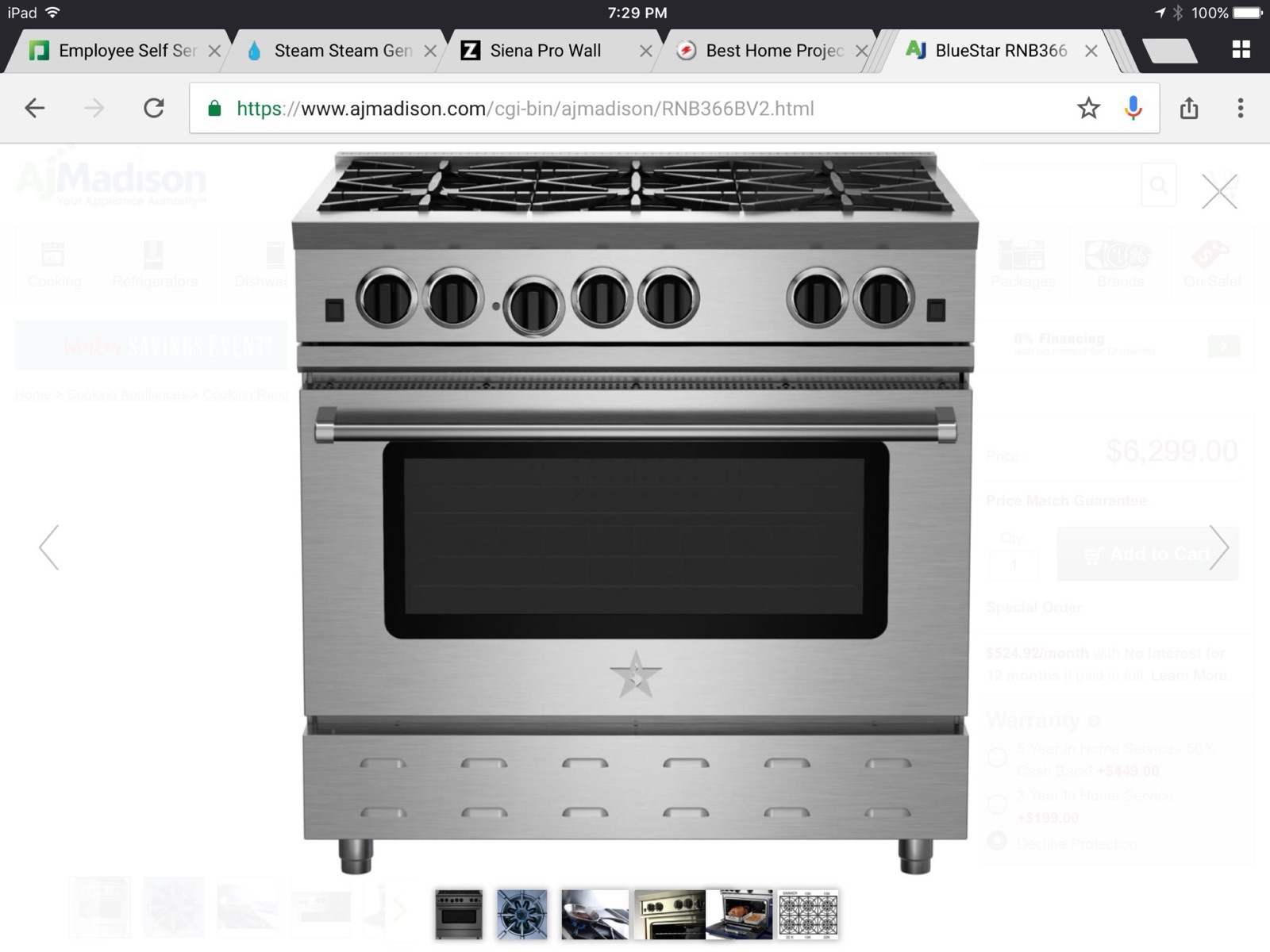
| Type | BlueStar RNB 36" 6-burner professional gas range — open burners, no continuous pilot (spark ignition) |
|---|---|
| Make | BlueStar |
| Model | Platinum Series RNB366BV2NSS-SP — the RNB366BV2 in stainless, factory natural gas |
| Serial number | owner's edition |
| Fuel | Natural gas from the factory — not a field LP conversion |
| Burner output | Main burners ~22,000 BTU; simmer burner ~1,300 BTU; oven burner ~30,000 BTU; infrared broiler ~15,000 BTU (BlueStar published specs for this range line) |
| Location | East wall of the kitchen, under the Zephyr hood |
| Age & history | Original to the 2017 build. Never replaced; no failure and no service call. |
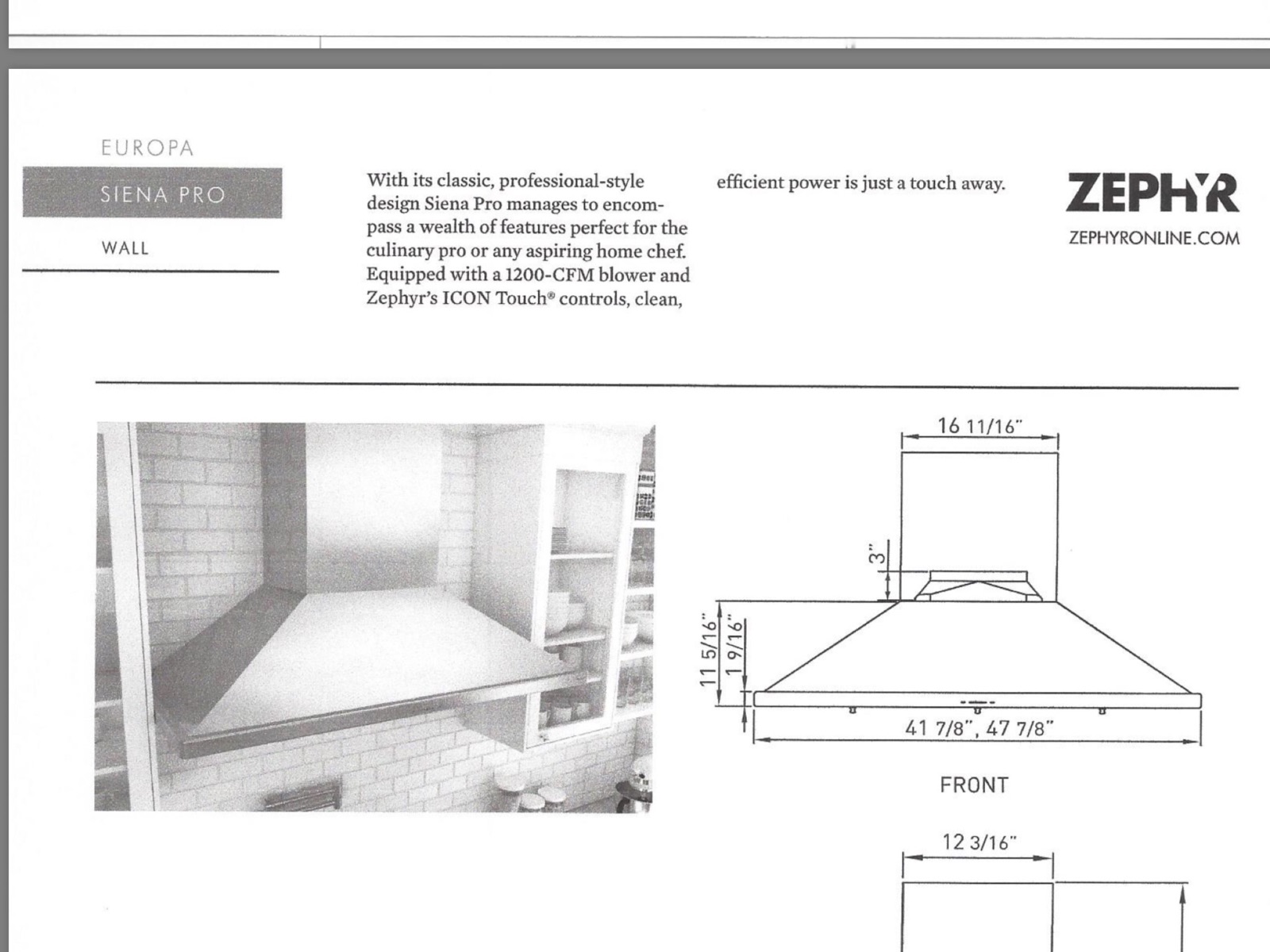
| Make/model | Zephyr Siena Pro ZSP-E42BS — a full wall-mount chimney hood, stainless, not an insert or liner |
|---|---|
| Width | 42" nominal (41-7/8" actual body width) over the 36" range — a deliberate 3" overhang per side |
| Airflow | 1200 CFM blower, ICON Touch® controls, dual-level LED lighting, A·C·T (Airflow Control Technology) |
| Makeup air | Automatic — see the makeup-air system below |
| Age & history | Original to the 2017 build. Never replaced; no failure and no service call. |
| What it is | A powered makeup-air damper that opens automatically to feed the range hood |
|---|---|
| Trigger | A pressure sensor on the hood — the damper opens when hood exhaust pressure crosses its threshold |
| Intake | Roof |
| Outlet | Vent in the upstairs hallway |
| Air movement | Natural draw — the damper is powered, the airflow is not; the hood’s own negative pressure pulls the air in |
| Controls | None. Fully automatic, with nothing for the occupant to switch, set or schedule. |
| Make/model | to gather |
| Make/model | InSinkErator Badger 5 |
|---|---|
| Type | Continuous-feed, 1/2 HP, 120 V — InSinkErator’s entry-tier residential model (no auto-reverse, no stainless grind components) |
| Which sink | To confirm at walkthrough — main kitchen sink or the island prep sink |
| Make | Electrolux ICON |
|---|---|
| Configuration | Built-in column pair — one all-refrigerator column, one all-freezer column, installed side by side under a shared top louvered grille and toe grille. Which column is the fridge vs. the freezer — to confirm at walkthrough (both doors look identical from the outside). |
| Trim | Electrolux ICON double refrigerator trim kit, TRIMKITSS2 — the stainless surround that joins the two columns into one built-in run |
| Model numbers | owner's edition |
| Serial numbers | owner's edition |
| Consumable — water filter | model to confirm — replace on the schedule printed on the cartridge or every 6 months, whichever comes first |
| Age & history | Original to the 2017 build. Never replaced; no failure and no service call. |
| Make/model | Sharp SMD2470AS — 24", 1.2 cu ft, 1000 W, stainless |
|---|---|
| Serial number | owner's edition |
| Controls | Popcorn, Reheat, Beverage, Defrost, Potatoes, Vegetables, Keep Warm, numeric keypad, motorized Open/Close |
| Age & history | Original to the 2017 build. Never replaced; no failure and no service call. |
| Make | Bosch |
|---|---|
| Series | Bosch 800 Series, bar handle |
| Model | SHX68TL5UC to check against the sticker on the door rim |
| Serial number | owner's edition |
| Noise level | 44 dBA — Bosch’s published figure for this model |
| Cycles | Heavy, Auto, Eco, Normal, Speed 60, Rinse |
| Options | Delay, Half Load, Delicate, Sanitize, Extra Dry, Extra Scrub |
| Age & history | Original to the 2017 build. Never replaced; no failure and no service call. |
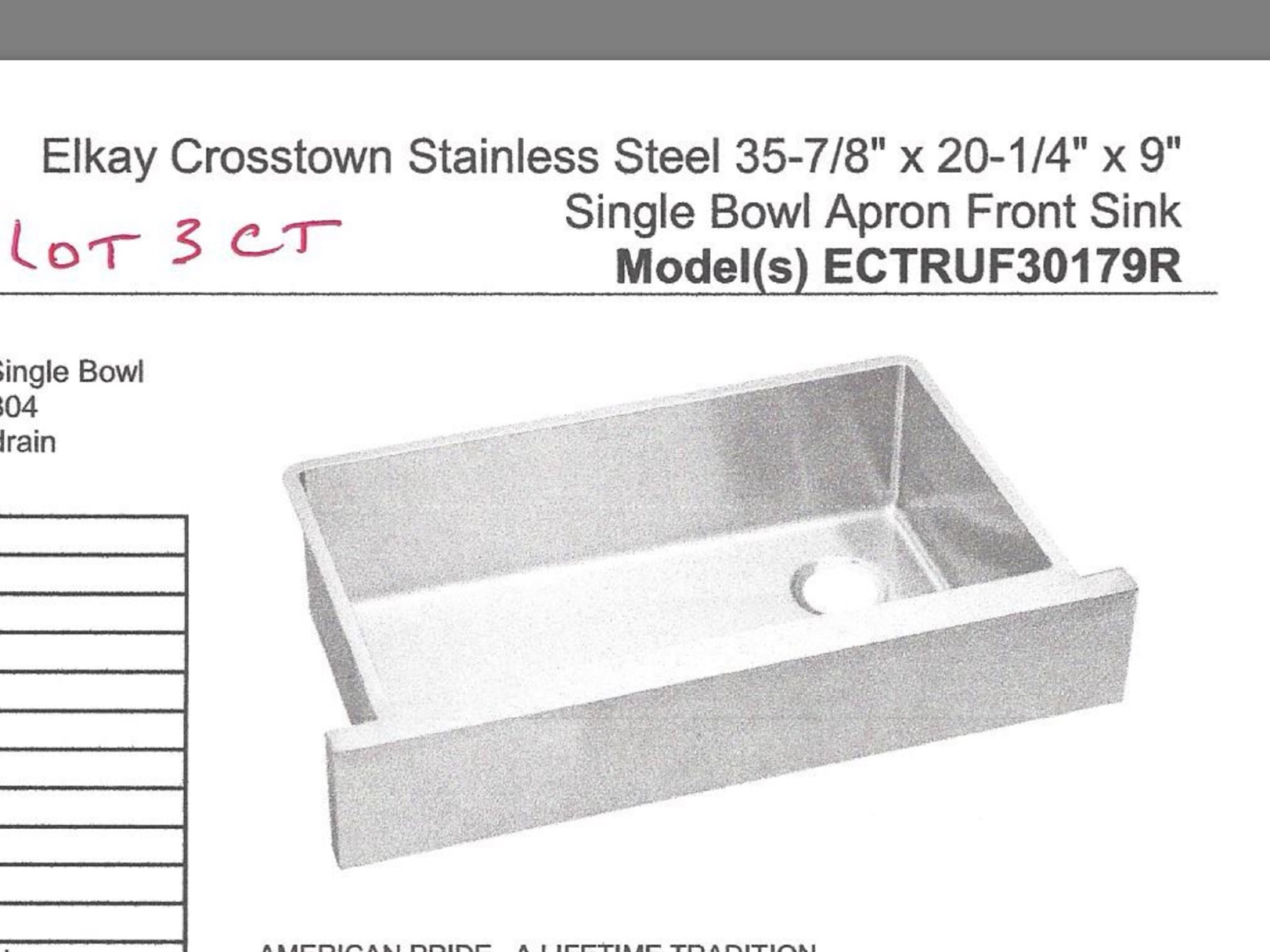
| Sink | Elkay Crosstown ECTRUF30179R — 18-gauge stainless, single-bowl apron-front (farmhouse), 35-7/8" x 20-1/4" x 9" |
|---|---|
| Faucet | Kohler Tournant® K-77515-CP semi-professional pull-down, polished chrome — coiled pull-down hose, 3-function sprayhead, high-arch swing spout confirm finish/model at walkthrough |
| Walk-in pantry | Custom wire shelving on both long walls and the back wall. Its door is off the butler’s pantry, not off the kitchen directly — the two pantries are different rooms. |
|---|---|
| Additional storage | A tall pull-out pantry cabinet (wire-basket pull-out) flanking the kitchen confirm whether this was built, in addition to the walk-in pantry |
6Documents & links
- BlueStar — 36" RNB Series Range (product page)
Specs for the RNB range line. - BlueStar — Use & Care Manual, Freestanding Ranges (RCS/RNB/RPB Platinum™)
Official PDF — grate/burner cleaning, igniter care, general troubleshooting. Series-level: covers the RCS/RNB/Platinum families, 24"–60". - BlueStar — manuals & specifications hub
In case the model-specific manual above changes; the hub for all BlueStar documentation. - Zephyr — Siena Pro Wall range hood (product page)
1200 CFM, ICON Touch controls, Europa collection. zephyronline.com now lists the current-generation ZSP-E36DS/E42DS/E48DS successors; the house has the earlier BS generation (BriteStrip LED). - Zephyr — Siena Pro use, care & installation manual (PDF)
Official Zephyr documentation for ZSP-E36BS/E42BS/E48BS — the house unit is the ZSP-E42BS. - Elkay — Crosstown ECTRUF30179R (product page & spec sheet)
Spec sheet, care/cleaning PDF, install instructions and warranty all linked from this page. - Elkay ECTRUF30179R — spec sheet (PDF)
Official elkay.com asset host. Exact match for the installed sink. - Elkay Crosstown Farmhouse Sinks — installation instructions (PDF)
The document Elkay links from the ECTRUF30179R product page. Series-level: Elkay's generic "Crosstown Farmhouse Sinks" sheet, whose cutout diagram shows ECTRUF32179R as a stand-in. - Kohler — Tournant® K-77515 semi-professional kitchen faucet
Product page for the faucet family; CP is the polished-chrome finish. - Kohler K-77515 — spec sheet (PDF)
Official resources.kohler.com — includes rough-in dimensions; no separate install guide exists for this SKU. - Electrolux — Owner Support (manuals, FAQs, warranty)
Search by model number once the model numbers on the two columns’ interior plates are known. - Electrolux ICON built-in all-refrigerator column (EI32AR65JS) — use & care guide (PDF)
Archived via archive.org (manuals.electroluxusa.com is dead). Series-level — replace once the exact model is known. - Electrolux ICON built-in all-freezer column (EI32AF65JS) — use & care guide (PDF)
Same dead-domain situation, archived via archive.org. Series-level — replace once the exact model is known. - Sharp SMD2470AS — microwave drawer use & care guide (PDF)
Official files.sharpusa.com. Covers the SMD2470AS/SMD2470AH/SMD3070AS line — the house unit is the SMD2470AS. - Bosch — SHX68TL5UC product & support page (800 Series)
Official Bosch page for the installed dishwasher — model-specific manuals and parts download from here. - Bosch — Operating Instructions, 800 Series dishwashers (PDF)
Official Bosch/BSH operating instructions for the 800 Series. Same cycle and option set as the panel in this kitchen; the filter-cleaning, loading and troubleshooting procedures on this page come from it. - Bosch — dishwasher troubleshooting & owner support hub
Official Bosch troubleshooting index; search by model or serial for model-specific support. - InSinkErator — Badger 5 (product page)
Official product page for the installed disposer. - InSinkErator — "What can I grind?" (official care guidance)
Official guidance on what is and isn't safe to put down a disposer — the source for the Everyday-use and Maintenance guidance on this page. - InSinkErator — resetting a garbage disposal (official support)
Official reset-button and jam-clearing procedure — the source for the Troubleshooting guidance on this page.
Section 8Technical reference ExpandCollapse
The engineering layer — for a buyer's technician, or a curious owner.
For the kitchen nerd: why an open-burner range behaves the way it does, how the house feeds a 1200 CFM hood, and what nine years of original appliances actually means.
Open-burner architecture
BlueStar’s open-burner ranges (the RNB/RCS/RPB families) put the flame directly under the pan with no sealed burner cap restricting airflow the way most residential ranges do — this is what gives them both very high top-end output (~22,000 BTU) and a genuinely low simmer (~1,300 BTU on the dedicated simmer burner), a spread that’s hard to find outside commercial equipment. The tradeoff is that open burners have exposed spark igniters that need to stay clean and dry to fire reliably — see Troubleshooting.
Makeup air — how a tight house feeds a 1200 CFM hood
Residential exhaust hoods above roughly 400 CFM trigger a makeup-air requirement under the International Residential Code and Washington’s state amendments. The reasoning is physical, not bureaucratic: air blown out of the house has to be replaced by air coming in, and a modern, well-sealed envelope does not leak fast enough to supply 1200 CFM. What a hood cannot get through the walls, it takes from wherever else it can — including, in the worst case, backwards down the flue of a vented combustion appliance. That is how a kitchen fan becomes a combustion-safety issue.
This house answers it directly rather than by derating the hood. A pressure sensor on the hood monitors exhaust pressure. When the hood is working hard enough to matter, the sensor opens a powered damper upstairs, and outside air enters through a roof intake and discharges from a vent in the upstairs hallway. The damper is the only powered part — there is no supply fan. Once the damper is open, the hood’s own negative pressure does the work of pulling the replacement air in, which is why the system is silent apart from the damper itself and needs no balancing.
- Automatic, and only when needed. The damper is closed the rest of the time, so the house isn’t sitting open to the roof whenever the hood is off.
- Upstairs on purpose. Introducing makeup air away from the kitchen means the replacement air is drawn through the house toward the hood rather than blowing straight across the cooktop, which would disturb the flames and defeat the capture.
- Outside air is outside temperature. Cold air at the hallway vent in January is the system working correctly. It only runs while the hood does.
- It is not optional equipment. Disabling the damper does not just annoy the hood; it removes the provision the hood was permitted with.
The one thing this page cannot yet tell you is the damper’s make and model — to gather. That matters only if it ever needs a part; everything about operating it is above.
The refrigerator and freezer columns
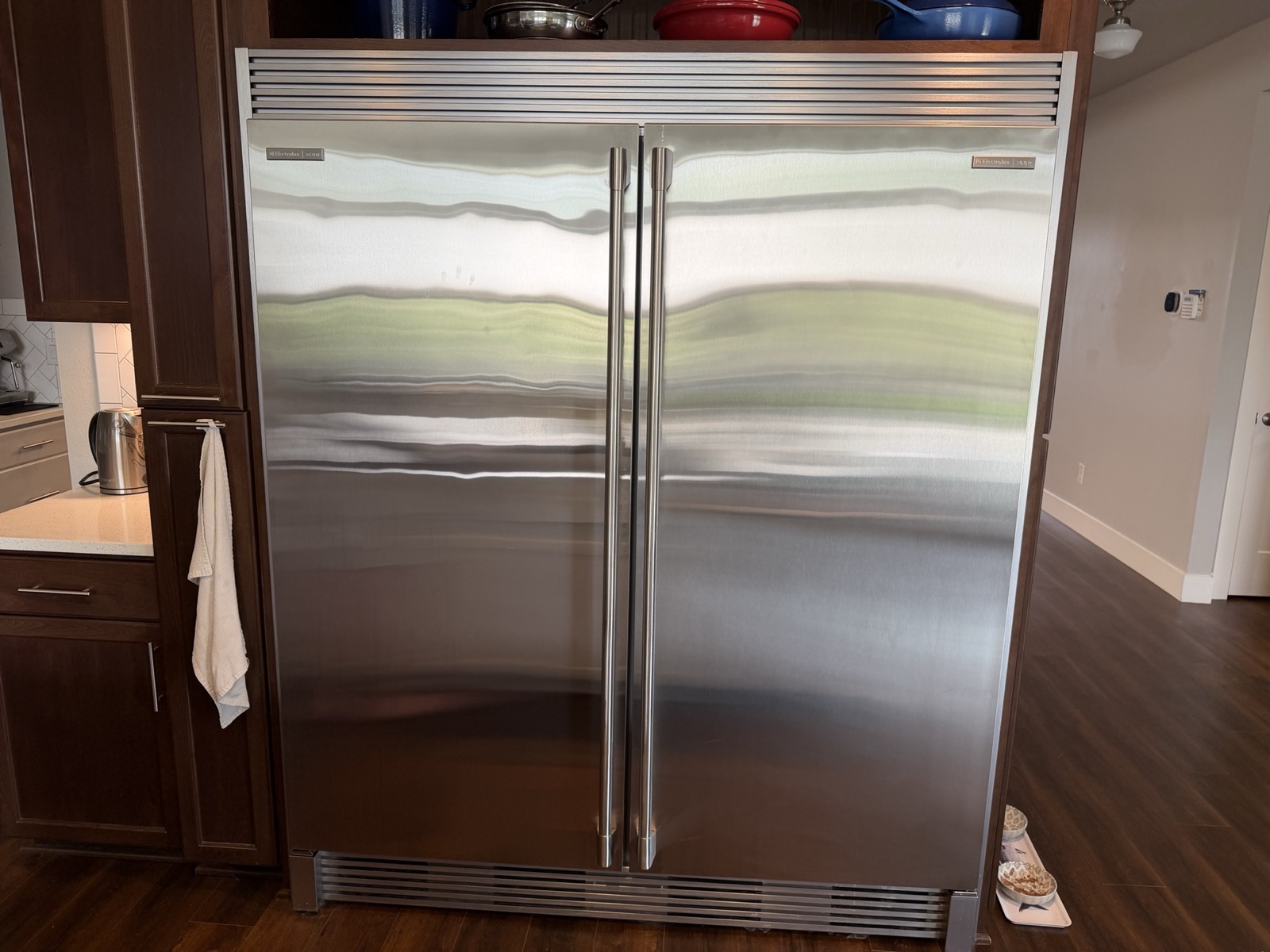
Refrigeration here is a column pair, not a single side-by-side box: one all-refrigerator column and one all-freezer column, each full height, standing side by side under a shared top louvered grille and toe grille and joined into one built-in run by the TRIMKITSS2 double trim kit. It is the more expensive way to do it and the better one — each column has its own compressor and its own air, so the freezer cannot dry out the produce, and either half can be set for what it holds rather than compromising between the two. The doors are identical from the outside, so which column is which is a walkthrough item, as are the model and serial numbers on the interior plates.
The microwave drawer
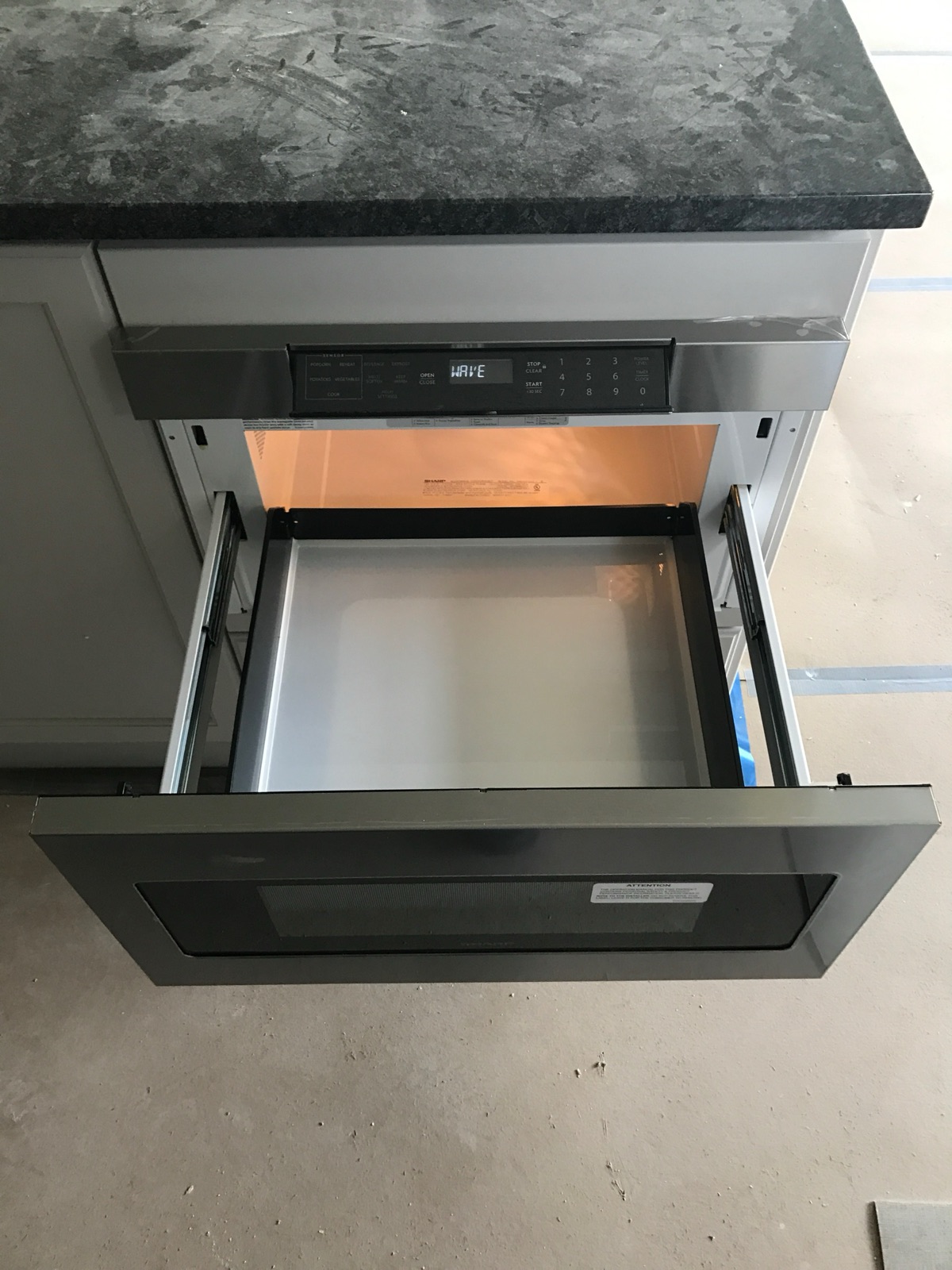
The unit built into the island is a drawer-style microwave — a Sharp SMD2470AS — rather than a warming drawer, which is the thing people usually assume when they see a drawer front at that height. The control panel is a microwave’s throughout: Popcorn, Reheat, Beverage, Defrost, Potatoes/Vegetables presets, Keep Warm, a full numeric keypad, Start/+30 Sec, Stop/Clear, Timer/Clock and Power Level. There is no separate warming drawer in the kitchen.
The dishwasher
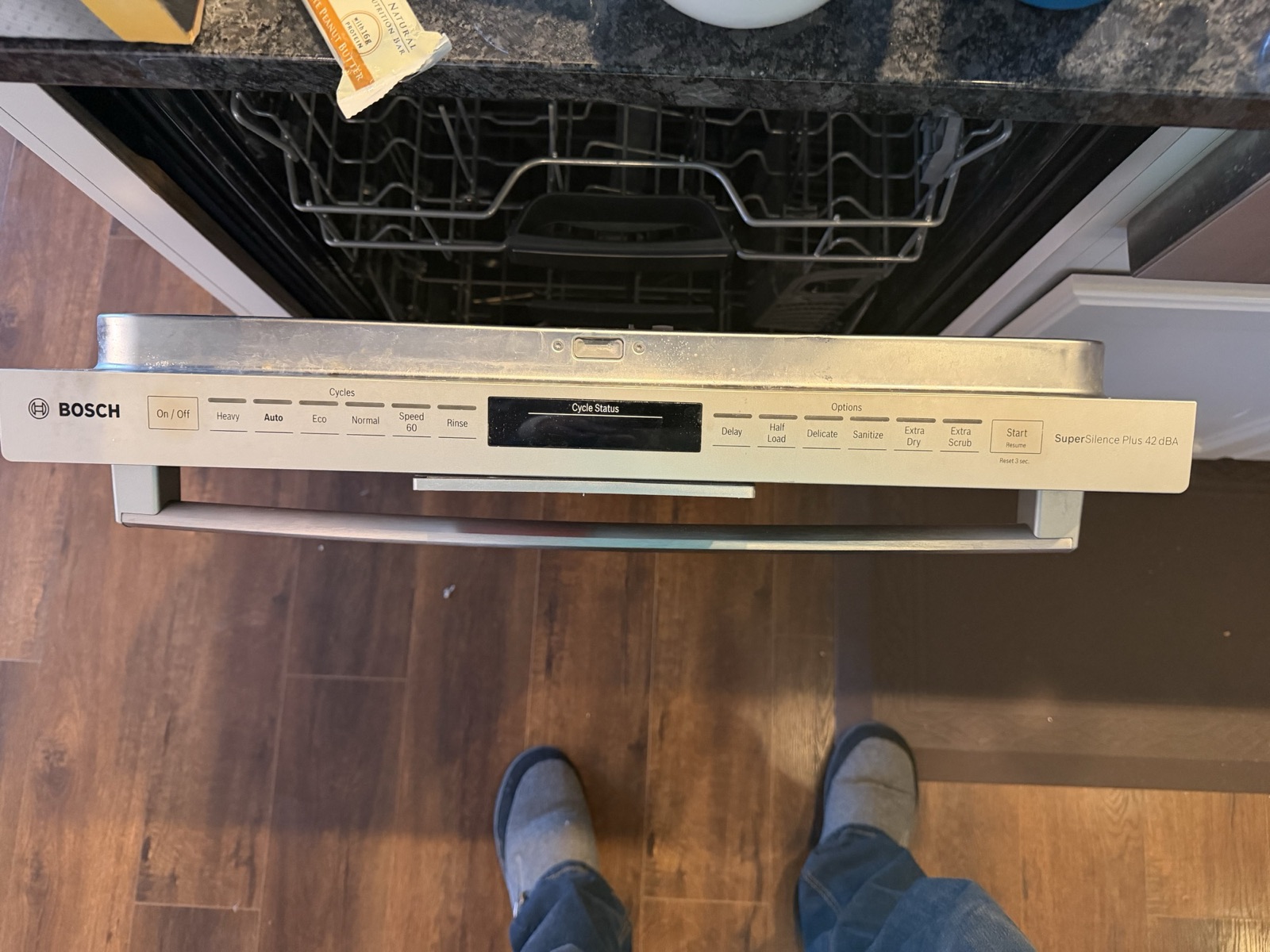
A Bosch SHX68TL5UC, 800 Series, bar handle. Its six cycles and six options are the panel you will actually use: Auto reads soil level and adjusts, which is the right default for a mixed load; Eco is the low-energy long cycle; Speed 60 is the one that saves an evening. Extra Dry is worth knowing about because this generation dries by condensation rather than by a heating element — quiet and gentle on plastics, but plastics still come out damper than they would in a cheaper machine, and Extra Dry is the fix. One item stays open: the model on the sticker at the door rim is still to be checked against the SHX68TL5UC above. It is a two-minute check and changes nothing about how the machine is run.
Sink, faucet and the two pantries
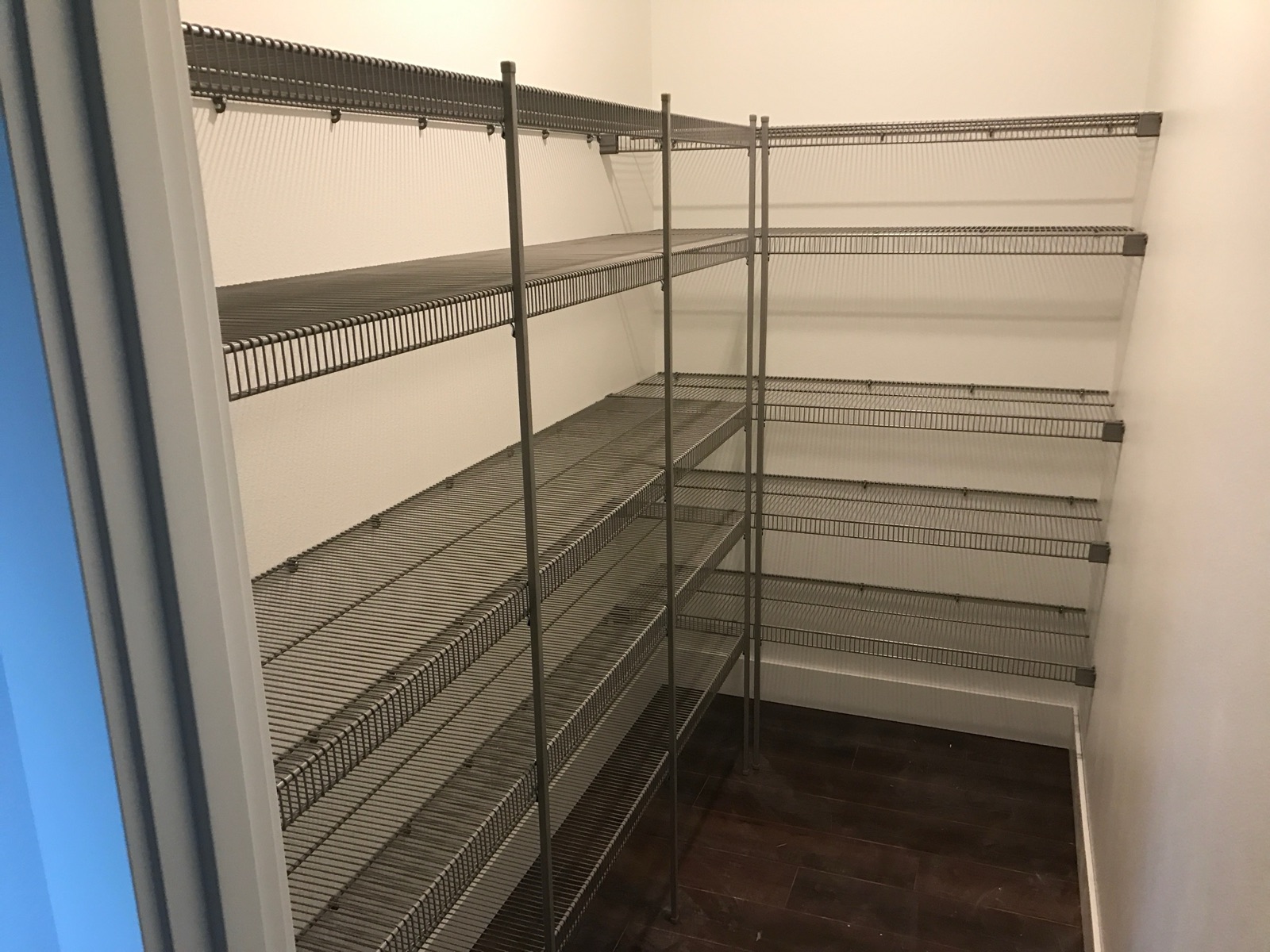
The walk-in pantry and the butler’s pantry are two different rooms, and they are worth getting straight. The walk-in is the shelved storage room; its only door opens off the butler’s pantry, the pass-through between the kitchen and the formal dining room. The butler’s pantry is a working counter with its own sink — it has its own page, alongside the bar.
Nine years, no failures
Everything in this kitchen — range, hood, refrigerator and freezer columns, microwave drawer, dishwasher, disposal — is the original 2017 appliance, chosen at build time rather than bought to a budget or replaced later to a cheaper one. In the nine years since, not one of them has been replaced, and not one has had a failure or a service call. The only appliance replacement anywhere in the house is the thermostat, upgraded to a newer ecobee.
That matters for two reasons. It is the most useful thing anyone can tell you about a nine-year-old appliance package — that it has been run daily and has not needed anything. And it means the specifications on this page describe the machines that are actually in the room, with no undocumented mid-life substitutions to discover later.
What to gather to finish this page
- Refrigerator and freezer: model/serial off the interior fresh-food-compartment side wall plate for each column, which column is which, and the exact water filter part number.
- Dishwasher: the model on the sticker at the door rim, against the SHX68TL5UC above.
- Makeup air: the make and model of the powered damper, and its location upstairs.
- Garbage disposal: which sink is the Badger 5 under — and is there a second disposal at the island prep sink?
- Faucet: confirm the finish and lever style against the Kohler K-77515-CP.
- Whether the pull-out pantry cabinet was built, in addition to the walk-in pantry.